Senate Week: Texas
We wrap up our regional previews with the state that is arguably a region unto itself, and which has its most competitive Senate race in decades: Texas. The Lone Star State was on our radars in 2018, when Beto O’Rourke challenged Ted Cruz, and even in 2020, when MJ Hegar generated some buzz around her effort to unseat John Cornyn. Beto came close in the end; Hegar did not. But neither of them was consistently leading polls into mid-September as this year’s Democratic candidate, James Talarico, has done. And neither faced a candidate as objectively unsavory as Ken Paxton. That’s right: for all that Ted Cruz does not generate a lot of warm fuzzies, even he – potentially the Zodiac Killer – does not reach Paxton’s level of odiousness. We’ll dive into it below.
I’ll summarize each race in a sentence first, then link to the longer write-up further down the page.
Previous posts in this series:
Senate Week Overview
The Big 10 (Great Lakes/Midwest)
The SEC (East)
The SEC (West)
The Great Northwest
The America East*
The Sun Belt
The Plains and Rockies
Texas
Incumbent: John Cornyn (R – defeated in primary)
2026 matchup: James Talarico (D) vs. Ken Paxton (R)
In a sentence: The popular political image of Texas as the ultimate red state has always been an oversimplification, and 2026 is a great year to update those perceptions.
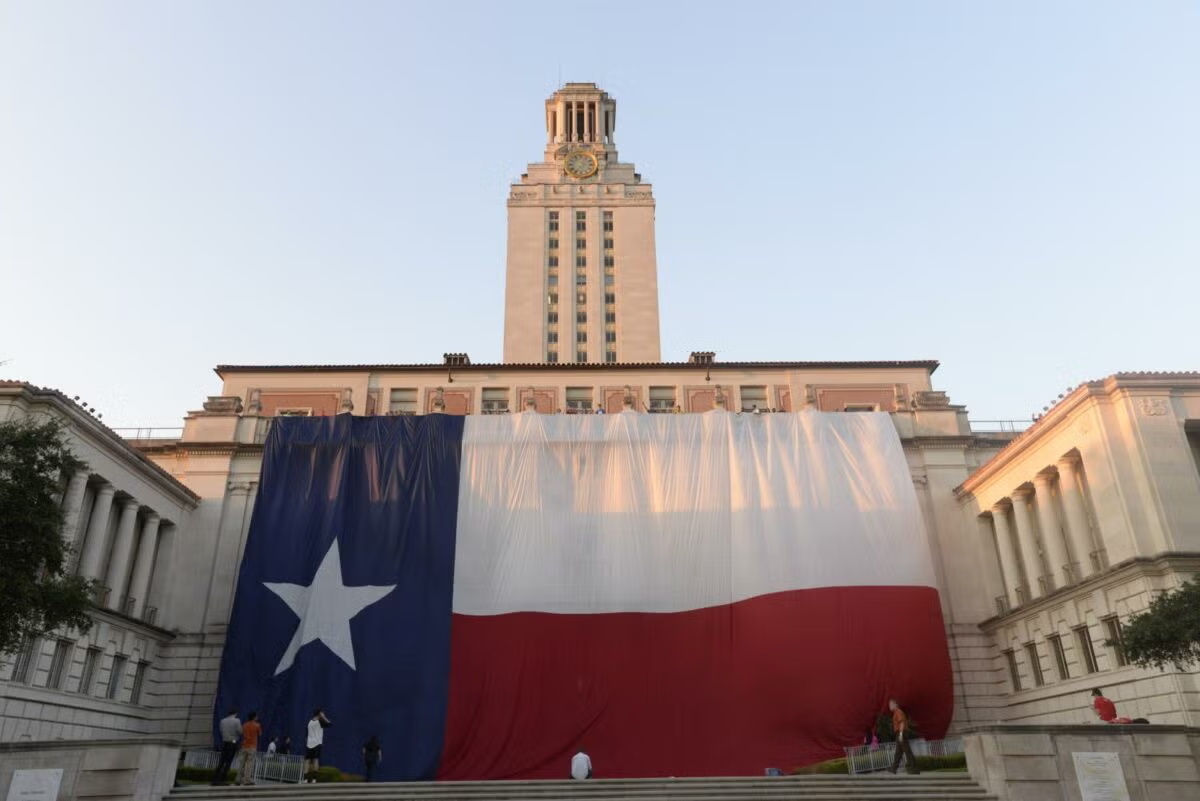
It is a curious thing when Democrats are favored to win a Senate seat in Texas but not in some of the classic swing states of recent years. But candidate factors still matter, even in today’s hyperpolarized politics. And in this state, the strengths and weaknesses of the respective candidates have upended the usual dynamics of a general election.
I have long gotten the impression that in the popular imagination, Americans assume Texas to be the country’s reddest state, rather than what it actually is: the largest red state. There’s a meaningful distinction to be made. In 2024, Texas was the 20th-reddest state in terms of Trump’s vote share, though it did regain its status as the state that gave the Republican nominee his largest raw vote margin (as it did from 1992 through 2016, before Tennessee briefly stole the crown in 2020). To be clear, Trump won it substantially – 56% to 42% – and by quite a bit more than his five and a half point (52% to 46.4%) win over Joe Biden four years earlier. It’s not a purple state – but we’re not talking about Wyoming or West Virginia here, states where the ground is simply too much for Dems to make up in a single two-year cycle from the presidential election to the midterm.
Another Texas politics cliche – popular among Democrats – is that Texas is “not a red state; it’s a non-voting state.” Well, Republicans have won Texas in high-turnout environments as well as low-turnout scenarios. Texas Monthly’s Ben Rowen wrote this past December that Ted Cruz’s team knew they were defeating Beto O’Rourke on election night 2018 when it became clear how high the turnout was: they were confident Democrats did not have the voters to win an election where more than eight million people turned out. If that many people were voting, it meant Republican voters were not staying home in droves. There’s a risk in that becoming circular logic, but at least probabilistically speaking, their instincts were sound. Remember, too, that non-voters (in Texas or nationally) are hardly monolithic. In fact, in 2024, they leaned toward Trump: Pew Research Center found that 44% of eligible non-voters in a nationwide survey said they would have supported Trump, compared to 40% of eligible non-voters who said they would have backed Harris had they voted.
A better argument might be: “Texas isn’t a non-voting state; it’s a voter-suppressed state.” I’m generally disinterested in political excuse-making, but this one is more reasonable insofar as Republican officials are constantly putting up obstacles to voting. The most recent example? Tarrant County, the state’s third-most populous county, is eliminating 92 poll sites this year compared to the last midterm election in 2022. Of note, Tarrant County was home to stunning Democratic upset earlier this year, when Taylor Rehmet won a special election to flip a deep-red state senate seat (Tarrant is a purple county overall, but that senate district was previously quite safe for Republicans). That said, I think the outrage that stems from Republicans playing these games offsets some of the potential for confusion. And the existence of early voting gives people more opportunities to make the potentially-longer journey to poll sites. I’m certainly not saying dramatic reductions in polling places are acceptable. And this can impact races on the margins. But I’m not sure this sort of chicanery will erase the enthusiasm gap Republicans face this year, either.
All of that brings us the race at hand. Four-term incumbent John Cornyn, formerly the Senate Majority Whip, finished first in the GOP primary but failed to reach the 50% necessary to avoid a runoff against longtime Texas attorney general Ken Paxton. Armed with Trump’s endorsement and the curious MAGA belief that Cornyn and his Senate colleagues have been an obstacle to carrying out Trump’s agenda this term, Paxton went on to win the runoff in landslide fashion, with 63.8% of the vote. With that, Republicans had nominated a man with an astounding record of corruption – a man who:
- was indicted for state securities fraud in 2015. Charges were dismissed in 2025 but Paxton had to pay restitution and participate in ethics training and perform community service.
- was sued by former staffers in for being fired in retaliation for their whistleblowing efforts with respect to allegations that Paxton had illegally used his office help a real estate developer.
- asked the House to appropriate the taxpayer funds necessary to pay a $3.3 million settlement to the whistleblowers.
- was impeached by the Texas House of Representatives in 2025 for accepting bribes, obstructing justice (including in the securities fraud case), making false statements, and abusing his official powers.
- called on supporters to march on the Texas Capitol to “peacefully protest” his impeachment – because summoning the MAGA folks to protest at a Capitol? That’s never led to problems before.
- directly threatened colleagues with political and electoral consequences while impeachment proceedings – on which those colleagues would be voting – were unfolding.
- carried out an extramarital affair (which was intertwined with the bribes) despite campaigning as a Christian conservative, and continued the affair after gathering his staff to tearfully them about the affair and how it was over, all while holding his wife’s hands.
- voted from a registration address where he allegedly does not live, in both 2025 and 2026.
- omitted rental income and mortgages from his financial disclosures to hide his actual wealth, as reported just last week by ProPublica and the Texas Tribune.
The Texas House voted 121-23 to impeach Paxton in overwhelmingly bipartisan fashion; the Texas Senate needed 21 votes to convict him but no article received more than 14 (all 12 Democrats, plus two Republicans). Paxton spent the 2024 primaries on a mission of vengeance, funding and campaigning for Republicans who had voted to impeach. And then he ran for Senate, putting a giant state’s worth of GOP electeds, activists and donors in the position of backing this man with countless strikes against him, or bucking their own party. That seems like an easy enough choice to me, or any normal person – but, you know, politics.
One of the votes to impeach was Democratic state representative James Talarico, first elected to an Austin district in 2018. At 37, he’s one of the country’s youngest Senate candidates. At first glance he’s the sort of young white progressive you’d expect in any number of districts like his – with the customary bachelor’s in government and Teach for America stint. But he also has a master’s degree in theology from the Austin Presbyterian Theological Seminary; he’s pursuing a divinity degree as well. An eighth-generation Texan who’s also a seminarian? As one would imagine, he can give a speech and he interviews well; he impressed Joe Rogan – who doesn’t know much about government but has a somewhat better read on politics. He told Talarico that he needs to run for president. That’s a long way off, but in the meantime he’s running a competitive Senate election thanks in part to his own skills and in part to Paxton’s lengthy list of character flaws and potential crimes. With the big suburban areas in this state continuing to shift left, and countless polls showing Hispanic voters in Texas (and elsewhere) reversing the gains Republicans made with them in 2024, Texas looks competitive even before you put a talented and nimble candidate like this guy on the ballot.
One more cliche: there are a lot of Republican accounts on social media, or pundits in the cable news space, who like to wave away concerns about this seat being in danger by talking about how Beto O’Rourke led polls against Ted Cruz in 2018. And then he went on to lose, so why are people acting like Talarico’s small but consistent polling leads are meaningful? Well, the thing is…that’s not true. A list of 42 polls from the Cruz/O’Rourke race shows Beto leading in two, Cruz leading in thirty-seven, and three ties. That Talarico has a narrow lead in public surveys does not mean he’ll win, but don’t let people tell you his is a replay of the 2018 race, either. Confronted with the durability of Texas’ GOP lean and the forthcoming tide of spending from both Elon Musk and from Trump’s MAGA, Inc. PAC, one could certainly argue that Talarico will fade slightly – and a slide fade is all it takes for him to lose. But it’s also the case that Talarico has raised gobs of money himself – in fact, Republicans have spent months panicking about the huge fundraising gap between him and Paxton. And it’s the case that voters might look at Paxton as a guy who keeps doing offensive and perhaps criminal things, and skating. Voters can decide not to let him skate this time – when they get to make the call themselves – instead of the Texas Senate acquitting him or the special prosecutor cutting a deal with him in the securities fraud case. Right now, as things currently stand, I think the polling reflects their desire to do so. And I think voters in quite a few places might be ready to start turning the page on a cynical period in our politics. Talarico offers something seemingly wholesome, perhaps, a time when that might just be starting to come back into political vogue. And he offers something else, too: the first time this site has predicted a Democratic win an election for United States Senate in the great state of Texas.
Rating: Tilt Dem (flip)
 Within the Margin