Archive
About those priors…
On Monday night, I posted some thoughts to make sure they were recorded for posterity before events overtook us and I semiconsciously retconned my priors to match. I approached the exercise with circumspect caution: positive portents abounded in the national polling, the data out of early voting in several states pointed to reasonably strong Democratic engagement levels, and local vibes were good in my homeland of Dutchess County, NY with all its competitive town and county elections. But we just didn’t know enough yet when I wrote those thoughts up. I couldn’t be sure that the national tide had truly shifted, that Black and Latino voters were starting to come back, that the reluctant Trump voters who backed him in ’24 because of cost of living concerns would pivot away from the party that has failed to address them despite unfettered control of the federal government (and here in Dutchess, control of most of county government). I couldn’t be sure that the “Mamdani Effect” that has re-engaged younger voters would overcome the corresponding fearmongering campaigns throughout the country but especially in the Hudson Valley, where the GOP sure seemed to think he was on the ballot in places besides NYC. Funny how they’re quick to condemn people for voting against Trump in local races, though.
So with all that in mind, I offered some tempered optimism: an 8-10 point win for Abigail Spanberger in Virginia with narrow wins for Ghazala Hashmi (lieutenant governor) and Jay Jones (attorney general) but uncertainty about how many House of Delegates seats she’d pull along with her; a 4-5 point win for Mikie Sherill in New Jersey; and juju-proof vagaries in Dutchess County.
Well, Democrats exceeded those expectations, and then some. Spanberger’s winning margin stands at 14.8% for the largest blowout in a Virginia gubernatorial since 2009. Polls close awfully early in Virginia, so the race was called even before Democrats in New York gathered for results watch parties that featured a a newly optimistic tenor. Hashmi and Jones won comfortably, too – however unfortunate that may be, in the latter case.1 In New Jersey, Sherill ran well ahead of most polling for a 13.5% margin of triumph.
Democratic successes were abundant downballot as well. They exceeded even the rosiest expectations for the Virginia House of Delegates, picking up 13 GOP-held seats to grow a 51-49 majority to 64-36, the largest Democratic majority in the Commonwealth since the 1987 elections. In New Jersey, Democrats have flipped three Assembly seats but Republicans concede that two more losses are likely. That’ll bring Dems to at least a 57-23 majority, the largest for either party since the GOP’s 58-seat win in 1991.
In Pennsylvania, where three Democratic justices on the state Supreme Court faced a retention vote, each passed the rest with flying colors – over 61% of Pennsylvania voters opted to retain all three justices. They carried the day in the usual Pennsylvania swing counties like Bucks and Erie, but elsewhere, too. Beaver, Fayette and Westmoreland counties spent decades as mighty Democratic strongholds in southwest PA before moving slowly to the GOP in the 1990s and 2000s, and sharply in the 2010s. But they supported all three Democrats for retention. Blue-trending Cumberland in the south-central portion of the state did, too – a result unthinkable 20 years ago. Luzerne County, home to Wilkes-Barre and Hazleton in the Anthracite Kingdom of northeastern PA, is often used to depict eroding Dem fortunes among working-class voters in the age of Trump. It, too, supported all three Dems. The red-for-decades Columbia, Montour and Union in the Susquehanna Valley? All three. Pike County on the NY border, which has neither an ancestral Dem heritage nor a notable recent trend toward Dems? All three. York County voted to retain two of them and Yes (retain) trails by only 20 votes for the third (David Wecht). Even Northumberland County – where Democrats are a half-century removed from their heyday – supported retention for one of the three.
The downballot triumphs in Pennsylvania are too numerous to list, but highlights include flipping the sheriff and district attorney positions in swingy Bucks County – the latter for the first time since the 1800s. Bucks was ground zero for Moms for Liberty victories in 2021; they were wiped out this time around. Clearfield County gave Trump 75% of its vote a year ago, but Democrat Josh Maines flipped a county court judgeship – beating the incumbent Republican district attorney for good measure. The small borough of Beaver went deep-red even when the surrounding county of the same name was a Democratic stronghold; it last voted for a Democratic presidential nominee in 1912. It had an unbroken streak of Republican mayors dating to World War II. Well, that streak is broken.
To bring it home, I’ll note that in Dutchess County – where I hedged mightily despite increasing signs for optimism as the election drew to a close – Democrats had the strongest night in the party’s history. There have been great federal and state elections before for Dutchess Dems, but in county races, nothing like this. I’ll be writing in more detail in a future post, but Dems held the Comptroller position and flipped a county court judgeship – by margins not previously seen for Democrats in countywide offices. And they decisively flipped the county legislature, last held by Dems in 2008-09, along with a dozen and a half town-level seats.
I was too cautious, it turns out – Democrats won, they won bigger and more widely than both the polls and the incorrigible optimists foresaw, and they did it both via increased turnout over similar contests in previous years and, as Nate Cohn notes at the New York Times, by flipping 2024 Trump voters. What a night. More to come from me on these happenings.
- I rarely vote for a Republican, but I would have in the Virginia AG race because I simply do not believe Jay Jones can hold a law enforcement position with any credibility with his history of graphic, violent texts. I understand all the counter-arguments; I also disagree with them. ↩︎
Very Quick Election Eve Thoughts
Keeping this very brief tonight, but I wanted to check in to deposit a few concepts so that I cannot retcon my priors after tomorrow!
Starting with the big picture: Trump is polling poorly by any standard, including his. He is polling particularly poorly on his handling of the economy and the cost of living – arguably the most critical aspect of his election a year ago. In most surveys, that’s top of mind for voters as is typically the case. Tariff wars, demolishing part of the White House to build a ballroom, fighting with Jimmy Kimmel…these do not make for a laser focus on affordability. The Democratic Party continues to poll at historic lows, but some of that is driven by committed Dems angry at party leadership but still highly motivated to vote against Trump and the Republicans.
On the whole it feels more like 2017 than 2021, as we might expect: there’s a Republican in the White House and negative partisanship is a powerful driver in today’s politics. Accordingly, Abigail Spanberger appears headed for a high-single digit or maybe double-digit win to flip the Virginia governorship back to Democrats. Ghazala Hashmi is probably set to win the lieutenant governor’s race with a smaller margin after a much more lowkey campaign. And potentially completing the trifecta of Democratic flips is Jay Jones, their deeply flawed candidate for attorney general against incumbent Jason Miyares. I do not personally see how Jones can serve in a law enforcement capacity given revelations of horrific, graphic texts he sent a few years ago, but polling shows a very tight race and historically, scandal-plagued candidates often overperform their polling a bit as voters tend to give a socially-desirable response to pollsters.
The New Jersey governor’s race is trickier. Republican Jack Ciatarelli nearly upset Phil Murphy in 2021, and since then we’ve seen New Jersey lurch rightward in last year’s presidential race. Democratic nominee Mikie Sherrill has struggled to close the deal, and I have concerns about whether Trump’s rapid collapse among the non-white voters he flipped last year translates to voting for Dems versus not voting at all this year. I have Sherrill winning, but by substantially smaller margin than Spanberger – let’s call it 4-5% for Sherrill versus 8-10% for Spanberger.
Drilling down much closer to my own context in Dutchess County, I don’t want to engage bad juju by offering specific predictions. It invites extra disappointment if you predict local wins and they don’t happen, and recriminations are inevitable if you predict local losses. So I’m staying above the trees here. The national factors mentioned above, in combination with the shifting makeup of the respective party coalitions in ways that have substantially raised the floor for Dem turnout in off-year races, provide reasons to believe that a strong slate of Democratic candidates can hold the comptroller’s seat, flip a county court judgeship, and flip the county legislature to Democrats for only the third time in our county’s history. There are some hyper-local things to mitigate against that – a boat club controversy in Red Hook, the ever-looming specter of low turnout in Poughkeepsie though signs are encouraging on that front so far – but the much bigger issue in my view is the dichotomy in what drives each party to the polls here. It certainly seems like the GOP can just scream “Mamdani!” over and over and presto, a good chunk of their base buys that Democratic candidates must be socialist, Muslims and whatever else annoys them about Mamdani. But at the same time, in my experience, convincing certain Democrats that a candidate is sufficiently left for their preferences is a massive challenge. Mamdani excites, but proving someone without such a high profile is worth their time – even if their progressive credentials are solidly in order – is an undertaking that is often met with shrugs. I don’t know how to square that circle. And it likely won’t hold Dutchess Dems back if indeed the national tide has truly shifted substantially in Democrats’ direction – but if it has not, it may well prove decisive. Tomorrow will provide much-needed illumination.
Another Year, Another Special Election Win

And most importantly…a chance to mention the Lincoln Highway!
Coalitions determine election outcomes, and the current sorting of the American electorate is leaving Democrats with a greater share of the highest-engagement, highest-propensity voters. This has limited value in high-turnout, national elections. But it raised the party’s floor in the 2022 midterms despite then-President Biden’s unpopularity, and it has contributed to quite a few impressive performances in special elections taking place outside the normal calendar (i.e. outside November). That includes some victories in reddish territory, and a 2024 near-win in a deep, deep red part of eastern Ohio. That Ohio race turned out not to be remotely indicative of a Democratic comeback in the Buckeye State, as Trump went on to win the district and state by considerably larger margins than he had four years earlier. Instead, it served as a demonstration that many of the most-engaged voters are Dems even in heavily Republican areas, making them a higher proportion of the electorate in a low-turnout contest.
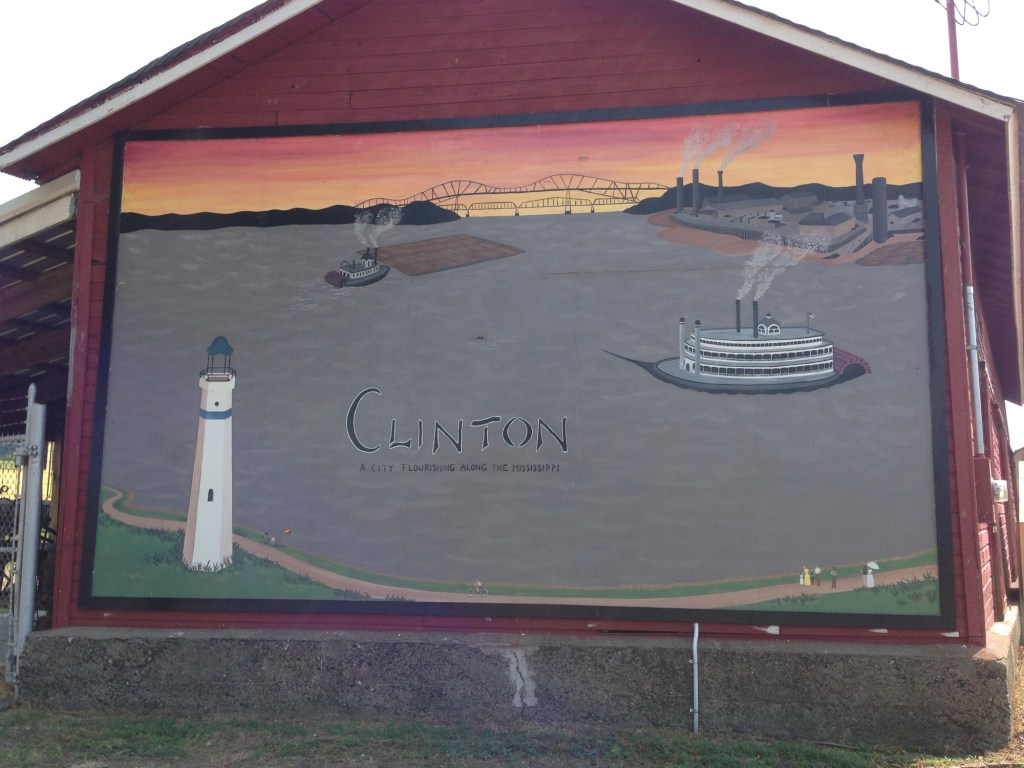
And so it is that we have last week’s impressive triumph for Democrat Mike Zimmer in Iowa’s 35th Senate District. This was a special election called after incumbent Republican Chris Cournoyer vacated the seat upon her appointment as Iowa’s lieutenant governor. This is a great district: it includes all of Clinton County, and small portions of Jackson and Scott counties to the north and south, respectively. Clinton County is home to Clinton, right on the Mississippi River. It’s the first place I ever visited in Iowa, on my Lincoln Highway road trip back in 2013. The Lincoln enters Iowa on U.S. 30, crossing the Mississippi from Illinois. Clinton’s a cool place, with paddlewheel logo and its river-town vibes; this is the Midwest but maybe with a slightly Southern touch. Until 2020, they had an affiliated minor league baseball team; after MLB’s purge, it’s a collegiate summer league team these days. Clinton (both city and county) have been declining in population for decades. I’m sure it has its issues. But to my eyes in 2013, this district seemed like a cool and unique place to live.
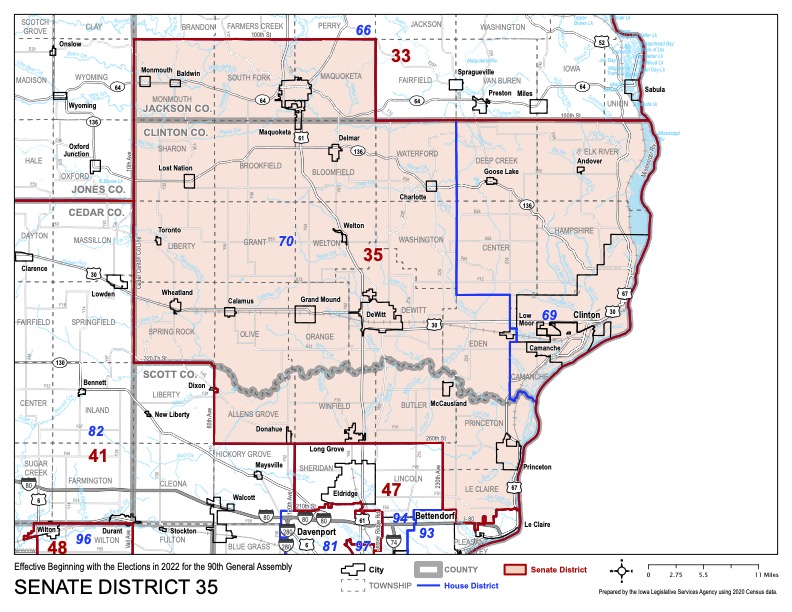
These days, it’s also a very red district. It supported Trump by 21(!) points over Kamala Harris last year. That’s quite a change from the Obama years, when he won this area by about the same margin – twice. But then Democrats began to plummet among the white working-class voters who make up a large portion of the electorate here and in most of Iowa, so it’s firmly Trump Country today. Downballot, this state senate seat flipped to Republicans in 2018 even as Democrats enjoyed a good year nationally; in 2022 Cournoyer was re-elected to the renumbered district by 22 points.
You wouldn’t know that from this special election, though. Zimmer won by almost four points, flipping a seat that will be hard for Democrats to hold in 2026 – but in the meantime gives them a new voice in the GOP-dominated Iowa legislature. He lost the Scott County portion by 12 votes. But he won the small Jackson County portion by over a hundred votes, and the Clinton County portion – which makes up 70% of the district – by a couple hundred. I had a feeling coming into it that this might be brewing, given recent history in special elections along with the timing: a week after Trump’s inauguration seems like a good time for Dems to blow off some steam by voting, even in a contest far removed from the maelstrom in the nation’s capital.
It probably helped, too, that this election took place last Tuesday in the midst of confusion over Trump’s freeze of trillions in grant spending. Every local government and not-for-profit entity that receives any kind of federal money was facing uncertainty over what comes next, without any guidance from an administration hellbent on embodying the Silicon Valley credo of moving fast and breaking things. A day later, the White House rescinded the freeze. But some damage was done, and that may have been reflected in the result – especially in an election with such a tight turnaround, leaving little time for absentee voting. So most voters were likely voting on Election Day itself, and the latest dose of Trump chaos probably did not dispose them favorably to the GOP.
There’s a clear trend in recent years in special elections up and down the ballot, all over the country. But where special elections used to be more indicative of performance in coming general elections, the relationship has changed a bit thanks to Democrats’ increasing dominance among the people most likely to turn out in any given contest. That said, winning in such deep red turf points, at minimum, to Dem voters retaining their engagement despite the national discourse declaring them to be in the midst of a period of wound-licking and navel-gazing.
 Within the Margin