Drawing the Lines: The New 63rd District
This is part of our Drawing the Lines series, in which we focus on New York’s new Assembly, Senate and Congressional lines – how they’ll impact the makeup of each chamber, and how that impacts policy at the state – and perhaps federal – level.
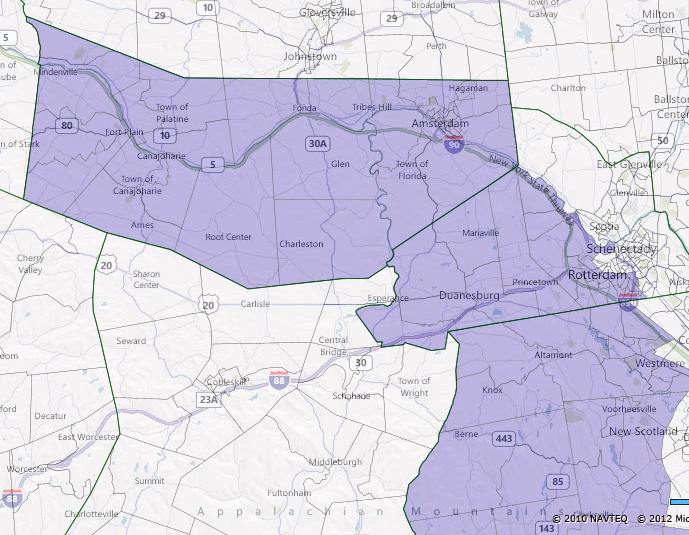
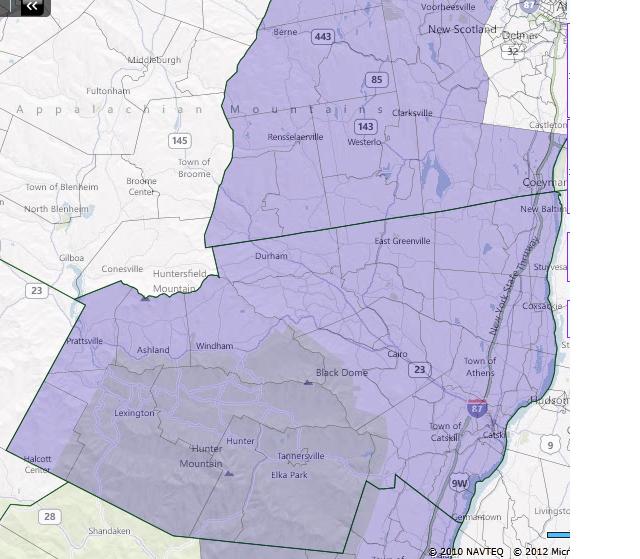
We haven’t yet seen the first draft of new state legislative maps out of Albany, but we know they’re coming soon. Jimmy Vielkind wrote last night about the proposed 63rd State Senate district – notable because it represents a controversial increase in the size of that body, and because its purpose would be to strengthen the GOP’s narrow (32-29 with one previously-Democratic vacancy in Brooklyn) hold on the chamber. Vielkind’s source in state government indicated the new district would be carved out of the capital region, though it’s best described as a hybrid that also draws from the Hudson Valley and Catskills.
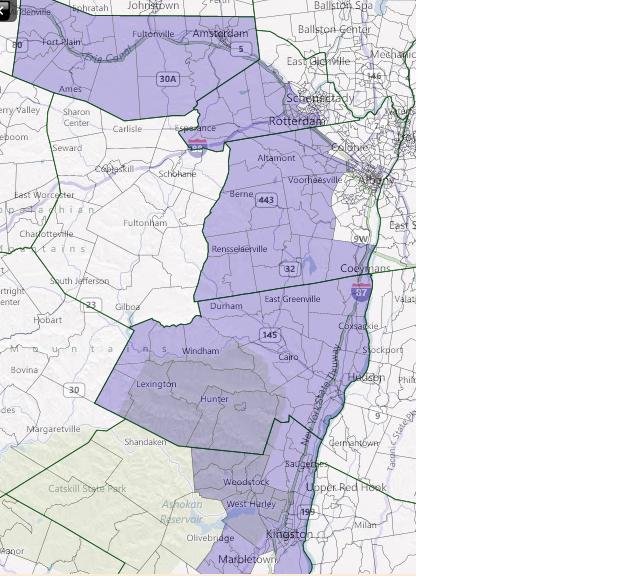
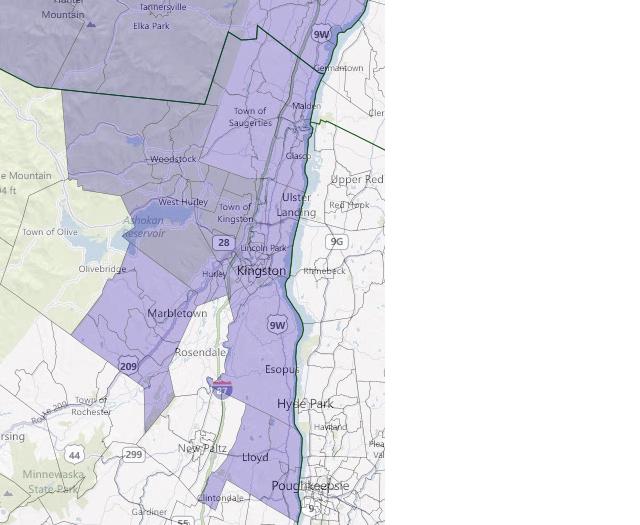
I have also uploaded close-ups of the upper, middle and lower portions of the proposed district.
In terms of aesthetics, it’s not a monstrosity: a bit long, but not particularly tortured or serpentine. It’s a stretch to say that Amsterdam and the Schenectady area have much to do with Kingston, but the NYS Thruway does serve as a common thread. Regardless, Republicans aren’t seeking awards for clean maps that preserve communities of interest: they want to pick up a free seat.
To that end, how good a job did they do here? If indeed the district Vielkind provides is the district we’ll see, call it a “Likely Republican” seat for now. Using DRA, it looks like a 53.5% Obama district (I didn’t include the sliver of Schenectady, but it’s only supposed to be about 1,000 people, and that won’t impact the 2008 presidential results much). That compares to 44.7% for McCain. As I (and others) have referenced before, that’s a pretty good district for Democrats on the federal level, but not so much in the New York state legislature. Democrats have rarely won any of the current districts that didn’t push a 58%-60% performance for Obama in 2008.
Looking into the individual components of the district, Montgomery County has been trending away from Democrats for a long time – Dukakis won it despite barely carrying New York in 1988, but McCain won it by 8 points in 2008. Obama barely improved upon Kerry’s performance there, a trend seen in several of of upstate’s older industrial cities. Andrew Cuomo barely beat Carl Paladino in Montgomery in the 2010 gubernatorial race. The district features some bluish Albany suburbs, connected to Montgomery by a small (and basically red) piece of Schenectady County. Further south, Greene County sees the occasional Democratic success at the town level and a few Democratic county legislators but is mostly Republican at all levels of government – Cuomo edged out Paladino by fewer than 400 votes – and has provided its current senator (Jim Seward of the 51st district) with comfortable margins during the last decade.
But then the district enters Ulster County, picking up Saugerties and Kingston and running all the way down the river to Lloyd (Highland) while also going inland for some Catskill communities. For me, this is the most interesting piece – because it means I live 10 minutes across the Kingston-Rhinecliff Bridge from the proposed district, and because of the rippling effects created across the western Hudson Valley’s senate districts. By grabbing strongly-Democratic areas like Kingston, Hurley, Marbletown and Woodstock, the proposed 63rd actually does feature a Democratic bench and organization. Presumably state Republicans are assuming that those liberal bastions won’t produce a candidate palatable further north, and there’s some validity to that. And Ulster is not monolithically Democratic by any stretch; Republicans control the county legislature and most town governments, even in the mountain towns. But Democratic Ulster County executive Mike Hein is riding high at the moment after running unopposed for a second term in 2011. Ulster Democrats right now are sorting through who the potential successor to retiring Congressman Maurice Hinchey will be, but they have enough people with experience and ambition that I wouldn’t be shocked if an Ulster Dem takes a shot at this race.
Republicans are said to already have their candidate in place, as Assemblyman George Amedore is expected to run. The Rotterdam resident won the 105th Assembly district in a 2007 special election and has been re-elected twice by comfortable margins. His campaigns have been well-financed and he would be expected to perform very strongly in his Montgomery and Schenectady base. Greene is a given for Amedore, even if they’ve not heard of him before he announces his bid. A Democratic opponent would need a very strong showing in Ulster and in the Albany suburbs.
That last bit might be the wild card here: for at least the last two decades, the entirety of Albany County has comprised its own senate district. This new district would carve the county into two pieces, with Senator Neil Breslin (currently of the 46th) seeing his district push across the river into Rensselaer County. While voters consistently tell pollsters they’re upset about gerrymandering, are they attached enough to Breslin that they’ll cast voters in large numbers against the party that cleaves him from the western section of Albany County? Breslin has faced primary challengers each of the last two cycles and lost the support of the Albany County Democratic Party in 2010. And will Democrats lose some votes as the advantage of incumbency disappears and they build their candidate’s name recognition from scratch?
Meanwhile, as I alluded above, nothing in redistricting happens in a vacuum. The Ulster portions of this district are being removed from Bill Larkin’s 39th and John Bonacic’s 42nd districts. Bonacic has occasionally been a Democratic target as his district leans Democratic, so these changes benefit him by removing blue sections from his turf. I could see a scenario in which Schoharie County replaces the territory lost to get it back up to population minimums, further securing his place. As for Larkin, he turns 84 next month. He’s taking one last shot before retiring in 2014, so Republicans would probably like to shore up that district. Removing Kingston and replacing it with Warwick (from David Carlucci’s overpopulated district) seems like a good way to do that.
In sum, Republicans have likely gained a seat here while better securing two others, but they’ve hardly assembled a rock-ribbed conservative district. It will likely be one of the better places for Democrats to play offense this year.
 Within the Margin